
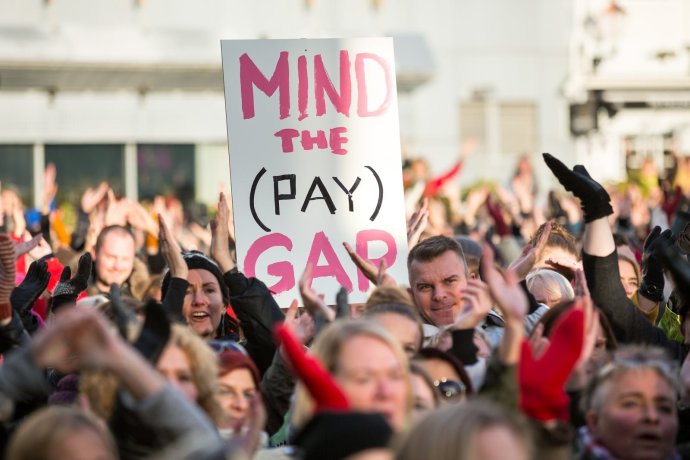
For the ninth year running, Iceland has been ranking first on the World Economic Forum’s survey for gender equality. The indicator, using dozens of very specific criteria, appears to be quite reliable and is the pride of the Icelanders. Indeed, the small European island located at the very North of the Atlantic Ocean has developed quite a reputation for its progressiveness. And Icelanders are not only progressive in their mindset; in this country gender equality is enforced by the law. The 2000 Act on Equal Status and Equal Rights of Women and Men does not only define areas where women are discriminated, it also acknowledges indirect discriminations (such as vehiculing stereotypes through the language) and offers a plan of action to eradicate all discriminations with very specific guidelines. In 2018, a bill to make lower wages for women illegal passed – the first of its kind in the world.
Of course, Iceland was neither born progressive nor did these changes happen overnight. They are the results of history and decades of women fighting for their rights. If nowadays students are taught about the importance of gender equality from preschool to college, Iceland has had its fair share of discrimination in the past. Change began to happen at the end of the 19th century. In 1850, Iceland was the first country in the world to grant equal inheritance rights to both men and women; in 1881, women were suddenly allowed to vote in local and parish elections. In 1915, women over 40 became able to vote in national elections before the age barrier was removed in 1920. Finally, in 1917 women were granted the same rights over their children as men. Interestingly enough, those major changes took place as Iceland was taking its independence from Denmark over the beginning of the 20th century, becoming a sovereign state in 1918.
Change continued to happen all along the century, peaking in 1975 when the movement Red Stockings called for a national “day off” for women. By electing not to call it a strike to avoid the negative ramifications that come with the word, they were hoping to get more mass-support and prevent participants from getting repercussions from their employers. This is how on the 24th of October, about 90% of the Icelandic female population went on a “day off”. Not only a professional day off but a domestic one as well. Their absence was immediately and massively felt all over the country, and the peacefulness of the protest helped to make their point. Many agree that this has at least partly lead to the election of President Vigdís Finnbogadóttir five years later, the world’s first democratically elected female Head of State. Her popularity quickly soared. She was re-elected three times after that therefore ruling for sixteen years. She became the longest serving female president from any country to date.
 International Affairs